The 911 Workforce Crisis Is Reaching a Breaking Point — Can AI Help?
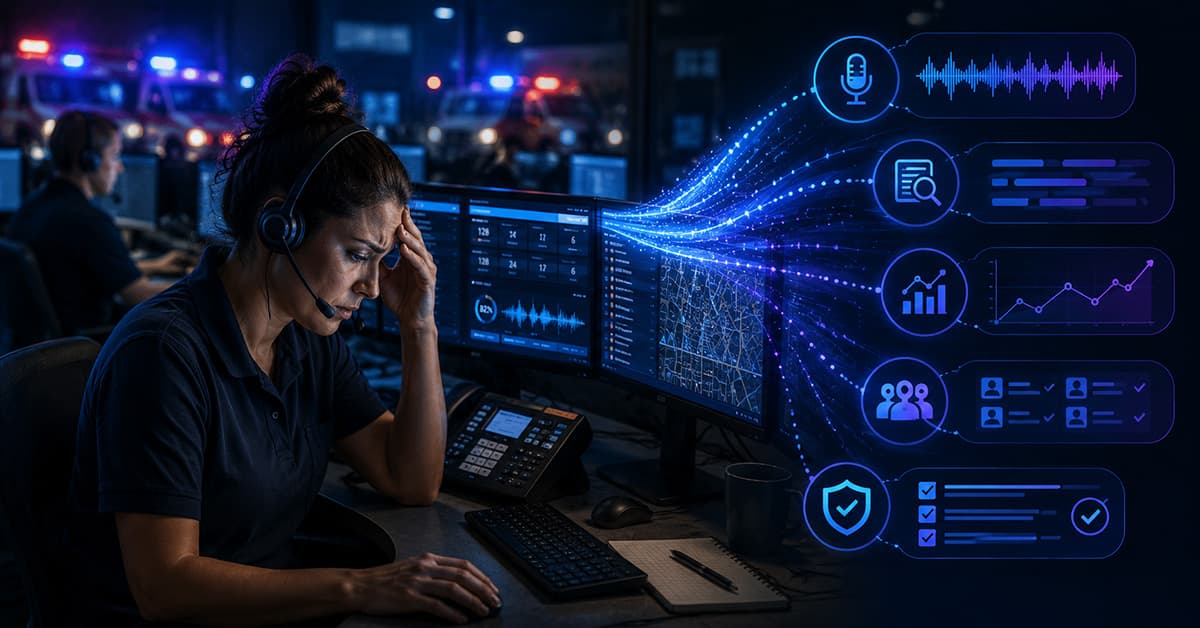
At 2:13 a.m., the call comes in. A mother is screaming. A child isn’t breathing. The dispatcher has seconds to calm the caller, gather critical information, dispatch responders, document the incident, monitor radio traffic, and prepare for whatever comes next.Then another call arrives. And another.For telecommunicators, this is not an extraordinary night. It is simply the job.Inside Public Safety Answering Points (PSAPs) across the country, emergency communications professionals are carrying an extraordinary operational and emotional burden. Staffing shortages continue to deepen. Burnout has become pervasive. Supervisors are stretched thin. And the complexity of the work keeps growing.Every year, communications centers absorb higher call volumes, more demanding incidents, increased public scrutiny, and expanding compliance expectations. Yet despite all the technology surrounding modern emergency response, one thing has not changed: for supervisors, there are still only so many hours in a shift, and for telecommunicators, there is only so much emotional weight they can carry before it begins to take a toll.That toll is becoming impossible to ignore. Across the industry, turnover rates in many PSAPs now range between 15 and 30 percent. Vacancy rates remain stubbornly high. Nearly one in four telecommunicators meets the clinical criteria for PTSD. Many arrive to work already carrying elevated stress before the first call even comes through the headset.And while much attention is placed on staffing shortages, the deeper issue is often operational overload. Supervisors who want to coach their teams and support their staff frequently spend much of their day trapped inside manual workflows: reviewing recordings one at a time, reconstructing incidents manually, compiling reports, scoring a small fraction of calls for quality assurance, and searching across disconnected systems for information that should already be accessible.The irony is difficult to miss. The people responsible for supporting the workforce often have the least amount of time to actually do it.That reality is beginning to reshape how agencies think about AI. For years, conversations around artificial intelligence in public safety carried understandable skepticism. In a profession built on trust, judgment, and accountability, no one wants technology making critical human decisions.But that is not where AI is proving most valuable. Its greatest impact may come from something far less dramatic: giving people time back. Time back by automatically transcribing calls and radio traffic. Time back by making recordings searchable within seconds instead of hours. Time back by helping supervisors identify patterns, coaching opportunities, and operational risks without manually digging through thousands of interactions.AI is not replacing telecommunicators. It is reducing the administrative gravity pulling them away from the work that matters most.Because the future of emergency communications will not depend on replacing human expertise. It will depend on protecting it.The agencies best positioned for the future will be the ones that recognize AI not as a replacement for people, but as a way to better support the people already carrying the mission forward every day.Download the Inform AI guide to learn how AI is helping PSAPs reduce administrative burden, improve operational visibility, and support workforce wellness across the communications center.And, watch for our next blog in this series: Why PSAP Supervisors Can’t Afford to QA Only 2% of Calls Anymore…
About the Author
Linda Haelsen
Linda Haelsen is a marketing professional with experience spanning two decades. Linda joined NiCE Systems following the acquisition of Dictaphone where Linda had served as Marketing Communications Director. Prior to Dictaphone, Linda served in key marketing positions at Netkey, a kiosk software company, and MC3, a division of Dun & Bradstreet. Linda has published articles in many trade journals on topics spanning physical security, public safety and customer relationship management. She has traveled extensively throughout Africa and Europe and worked abroad in the UK. She earned her MBA from Northeastern University in Boston where she took part in a study abroad program at the École supérieure de commerce de Reims. She holds an undergraduate degree in English (with a concentration in writing) from Rhode Island College.